Qwen3-Next Series Explained: 80B-A3B Hybrid Architecture with Instruct and Thinking
Qwen3-Next series: a hybrid architecture with Gated DeltaNet × Gated Attention. 80B total parameters with ~3B active per step, optimized for long context, high concurrency, and low latency. Instruct and Thinking target production chat and deep reasoning respectively.
Published 382 days ago. Content may be outdated.
Qwen introduces the next-generation hybrid architecture series — Qwen3-Next. It features 80B total parameters with sparse activation (only ~3B active per inference), significantly improving cost-efficiency for long-context, high-concurrency, and low-latency scenarios. The series contains two primary variants:
Qwen3-Next-80B-A3B-Instruct: Optimized for instruction following and stable formatting; it does not emit thinking traces (no<think></think>blocks).Qwen3-Next-80B-A3B-Thinking: Designed for deep reasoning; it generates thinking traces by default (with<think></think>; some chat templates may only show the closing tag), and typically supports longer chains of thought than the previous generation.
References:
- Hugging Face (model cards and collection for Instruct/Thinking)
- Qwen official blog and community materials
- OpenRouter model page and third-party summary (ai-bot.cn)
Why “Next”: Three Engineering Goals
- Cost & Throughput:
80B total × ~3B activebrings small-model efficiency while maintaining large-model capability. - Long Context & Stability: Optimized for 32K+ context, balancing key information recall and stable structured outputs.
- Production Readiness: Emphasis on latency and concurrency for online APIs, enterprise knowledge QA, and agentic workflows.
Architecture Overview: Gated DeltaNet × Gated Attention × MoE
- Gated DeltaNet (speed-first)
- Optimized for long-text processing with near-linear memory growth and fast streaming generation — ideal for high-concurrency services.
- Gated Attention (precision-first)
- Performs precise recall at critical positions, preserving key facts and paragraph structure in long-form generation.
- Large-scale MoE expert system
- Community sources indicate up to 512 experts; each request routes to only a small set (e.g., Top-K + 1 shared), enabling load balancing and compute throttling.
- Native MTP (Multi-Token Prediction) training
- Introduces multi-token prediction during pretraining, reducing inference steps, boosting long-text throughput, and lowering latency.
Instruct vs Thinking: How to Choose
-
Instruct (best for production chat/agents)
- No
<think></think>blocks; more stable formatting and alignment — great for productized use cases (customer support, structured JSON/Markdown outputs). - Stronger instruction-following and format control; easy to template and evaluate.
- No
-
Thinking (best for deep/complex reasoning)
- Defaults to injecting thinking markers via the chat template; seeing only a closing
</think>is normal in some templates (controlled by the official template). - Longer chain-of-thought, often improving accuracy and stability on multi-step logic, math, and programming tasks.
- Defaults to injecting thinking markers via the chat template; seeing only a closing
Practical tips:
- Choose Instruct for strict formatting and fast productization.
- Choose Thinking for complex reasoning, research, and engineering derivations.
- In RAG/Agent systems, you can route dynamically by task type.
Capabilities (Community Summary)
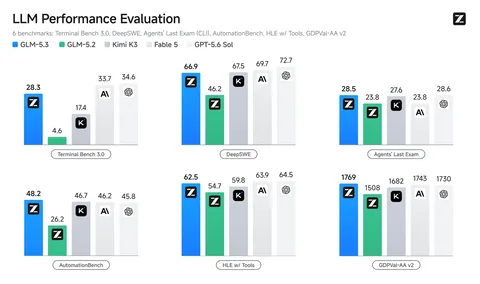
- Instruct: Matches or approaches larger flagship models (e.g., 235B) on many instruction/multi-task benchmarks, with advantages in long-text throughput and latency.
- Thinking: Shows stronger reasoning than many lightweight/fast models (reports indicate it can surpass Gemini 2.5 Flash-Thinking in some metrics) and can output longer reasoning chains.
Note: Please refer to official model cards and third-party evaluations for exact numbers. This article focuses on capability profiles and engineering trade-offs.
Typical Use Cases
- Long-form summarization and report generation: whitepapers, legal contracts, literature reviews.
- Code generation and refactoring: cross-file understanding, refactoring suggestions, test generation, and code reviews.
- Enterprise knowledge QA (RAG): multilingual QA, factual recall, traceable citations.
- Agentic workflows: stable tool-use, memory management, and structured outputs; mix Instruct/Thinking as needed.
- High-concurrency online services: low latency and stable alignment for commercial APIs.
Quick Start (Overview)
- Qwen Chat Web: switch between Instruct/Thinking (if available in the UI).
- Alibaba Model Studio (Bailian): production API access as per official docs, recommended for enterprise.
- Hugging Face: load according to the model card; the Thinking variant injects a
<think>snippet in the default chat template. - OpenRouter: use models like
qwen/qwen3-next-80b-a3b-instructvia OpenAI-compatible APIs.
Tip: The Thinking variant may output lengthy thinking content; if you want to hide it, strip
<think>...</think>via system prompts or post-processing.
Comparison with Previous/Same-tier Models
- Versus dense models like Qwen3-32B: Next gains “lower cost × higher throughput” via sparse activation and scales better for long context.
- Versus traditional MoE: the mixed Gated DeltaNet/Gated Attention design improves the balance of speed and precision.
- Versus trillion-parameter flagships: community reports suggest Instruct approaches some instruction benchmarks of 235B, while Thinking makes large gains in reasoning; overall, Next emphasizes speed and stability for production.
Links
- Hugging Face (Thinking): https://huggingface.co/Qwen/Qwen3-Next-80B-A3B-Thinking
- Hugging Face (Instruct): https://huggingface.co/Qwen/Qwen3-Next-80B-A3B-Instruct
- Qwen Official Blog (Qwen3 series): https://qwenlm.github.io/blog/qwen3/
- Third-party summary (CN): https://ai-bot.cn/qwen3-next/
- OpenRouter model page: https://openrouter.ai/qwen/qwen3-next-80b-a3b-instruct
More Articles