OpenClaw 2.0 Is Here: Agents Can Finally Pick Up Where They Left Off
OpenClaw 2.0 (v2026.8.1) rebuilds the web console, adds cross-device and cloud task continuation, stronger memory, session branches, approval controls, and agent collaboration.
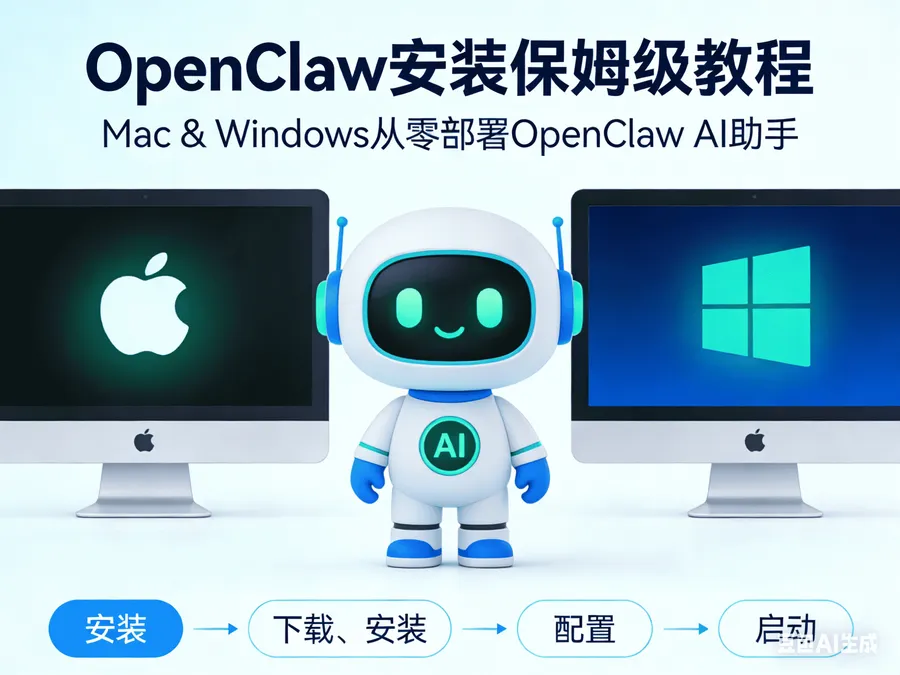
OpenClaw 2.0 is here.
The official version is v2026.8.1, and the release docs call it OpenClaw 2.0. This is not a new model or a chat window with a few extra buttons. It is a push to make OpenClaw useful for work that has to keep going after the first reply.
Until now, an agent often felt like an assistant you called on demand: receive a message, call a model, run a few tools, and stop. Version 2.0 is built around a harder question: can the task continue after an interruption, on another device, or several days later when the original context matters?
The biggest change: work is no longer tied to one machine
OpenClaw 2.0 can move session work to paired devices or cloud workers. The session workspace can move with it, while warm machines and project seeds can be reused instead of prepared from scratch every time.
That matters for long-running jobs. Code changes, test runs, and research tasks are poor candidates for occupying your laptop from start to finish. You can start the work locally, let a cloud worker handle it, then follow along from the Web, macOS, iOS, or Android client.
The release also adds durable progress cards. After a page reload or a client switch, the latest plan, status, and subagent activity can remain visible. This is less about a prettier interface than about acknowledging how agents actually work: a serious task may run for a while, and nobody wants to keep one browser tab open just to know whether it finished.
Conversations can finally be searched, branched, and rewound
OpenClaw 2.0 treats conversation history more like a working record than a pile of chat messages.
- Search visible history by exact words or phrases and reopen the surrounding messages
- Rewind from a user message or fork a new conversation branch
- Switch between retained branches and continue in different directions
- Edit queued prompts and reorder messages that have not been sent yet
There is an important boundary here: rewinding changes the chat context, but it does not undo files already modified, commands already run, or other tool side effects. It is closer to starting a new route from an earlier context than rolling a repository back with Git.
That distinction matters. An action an agent has already taken cannot simply disappear because someone changed the conversation branch. OpenClaw 2.0 makes that limitation explicit.
Memory is becoming part of the work
This release goes beyond treating memory as an archive.
With Active Memory enabled, personal installations can retrieve bounded private conversation context from the same agent by default. Group and channel conversations are outside that default recall path. In the background, model-assisted consolidation can promote material with provenance into long-term memory and create a Dream Diary.
OpenClaw also enables automatic learning by default. The system can collect reusable lessons, then apply scanner-approved skills or skills owned by Skill Workshop. User-authored skill changes remain pending instead of being silently overwritten.
The upside is obvious: an agent does not have to relearn a project’s conventions, tools, and preferences every time. The risk is just as obvious: once memory influences later decisions, bad information can travel further. Where a memory came from, how to turn recall off, and where human review happens matter as much as whether the system can remember at all.
Permissions are becoming a system, not a confirmation dialog
OpenClaw 2.0 adds finer controls for credentials, automation, and team access.
When an agent needs a credential, it can request one through a masked prompt without putting the value in chat history or model context. Shared credentials can also be bound to exact HTTPS destination hosts; unbound destinations fail closed before a secret is sent in plaintext.
Recurring automations can be approved for one exact operation and reused within that scope. If the job or operation changes, a fresh approval is required. Teams can assign roles that limit which agents, other people’s sessions, and operator scopes a member can access.
The shift is important. OpenClaw is no longer only asking how an agent should do something. It is also asking whose authority the agent is using and how far that authority reaches. For a system that can read files, run Shell commands, and operate messaging channels, that is more consequential than adding another model adapter.
The Web console is becoming a workbench
The 2.0 release rebuilds the Web experience and adds several capabilities that feel closer to a workbench:
- Show interactive widgets in chat and pin them to a session dashboard
- Grant widgets exact actions and network origins
- Export rendered results as PNG images
- Answer structured agent questions through cards, buttons, or plain text
- Create and manage Goals, Workboards, and automations from the Control UI
- Inspect the Gateway host, network address, operating system, uptime, CPU, memory, and disk status
Interactive results and Workboard are the most telling additions. An agent’s output does not have to end as a paragraph; it can become a panel that someone can continue to use. Tasks no longer have to disappear into a long transcript either.
A few other additions worth knowing
The release is broad, but several directions stand out:
- Agent collaboration: an optional A2A 1.0 channel plugin lets authenticated agents exchange text tasks and status
- Email triggers: inbound IMAP mailboxes can start agent work
- Local models: managed llama.cpp chat and local embeddings are supported, along with existing llama-server deployments
- Cloud execution: a Daytona sandbox backend provides isolated cloud execution
- Shared terminals: terminals can be shared within a session, while the agent remains bound by that session’s permission policy
- Media: image, audio, and video upload, reply, and playback flows are more complete across Web, macOS, iOS, and Android
- Backups:
openclaw backup sqlitecan create, verify, and restore SQLite snapshots
This is more than a longer feature list. OpenClaw 2.0 is bringing models, tools, devices, cloud workers, messaging channels, and session records into one operating system for agent work.
Upgrade carefully: existing configurations may need migration
This is not a completely frictionless update.
The bundled OpenProse plugin and /prose command have been removed. Existing .prose source files remain, but they need to follow the official Agent Skill migration path. Model references, provider settings, stored sessions, and automation routes using codex/* or openai-codex/* also need to be migrated to openai/* with openclaw doctor --fix.
External plugin authors should also check the SDK migration notes. The release lists several legacy import paths that enter the removal gate on September 1, 2026. They are not all removed in this release, but continuing to build on them is a short-term decision.
The official guidance is to back up configuration and state before upgrading. If the automatic update fails, run openclaw doctor --fix, then verify the migration and confirm that the Gateway starts normally.
Closing thought
The simplest way to describe OpenClaw 2.0 is this: it treats an agent as a persistent work system rather than a one-shot answer machine.
Cross-device continuation, searchable conversations, branches, long-term memory, structured approvals, and cloud workers all address the same failure mode: a task should not have to start over because a page refreshed, a laptop went to sleep, or one execution attempt failed.
That also makes permissions, backups, and migrations more important. The more work an agent can take over, the more clearly the system needs to show what it remembered, which credentials it used, and what it actually did.
Sources:
More Articles