Kimi K3 Packs 2.8T Parameters and 1M Context at 30% of Fable 5's Price
Kimi K3 launches with 2.8 trillion parameters, native multimodality, a 1M-token context window, and API pricing well below GPT-5.6 Sol and Claude Fable 5. Here is what matters.

Published 74 days ago. Content may be outdated.
Moonshot AI has officially released Kimi K3. The headline number is 2.8 trillion parameters, but the more consequential combination is native multimodality, a 1-million-token context window, frontier-level agent capabilities, and API pricing of $3 for input and $15 for output per million tokens.
One caveat matters from the start: Moonshot says K3 still trails GPT-5.6 Sol and Claude Fable 5 in overall performance. Its real pitch is different: get close to the proprietary frontier at a much lower price, then open the full model weights.
30-Second Summary
- Total parameters: 2.8T
- Architecture: MoE, activating 16 of 896 experts per token
- Context window: 1 million tokens
- Modalities: native text, image, and video understanding
- Primary use cases: long-horizon coding, knowledge work, deep reasoning, and multimodal agents
- API pricing: $0.30 cached input, $3 cache-miss input, and $15 output per million tokens
- Open-weight plan: full weights scheduled for release by July 27, 2026
- Reasoning modes: max effort at launch, with low and high modes coming later
How Large Is Kimi K3, Really?
| Item | Kimi K3 |
|---|---|
| Total parameters | 2.8T |
| Number of experts | 896 |
| Experts activated per token | 16 |
| Active parameter count | Not disclosed |
| Context window | 1,048,576 tokens |
| Attention architecture | Kimi Delta Attention (KDA) |
| Depth information flow | Attention Residuals (AttnRes) |
| MoE architecture | Stable LatentMoE |
| Quantization-aware training | MXFP4 weights, MXFP8 activations |
The 2.8T figure is the total parameter count. It does not mean every parameter is used for every token. K3 is a highly sparse MoE model that activates only 16 experts at a time. Moonshot has not disclosed the exact active parameter count, so 2.8T should not be treated as its effective inference size.
Moonshot says KDA, AttnRes, and Stable LatentMoE deliver roughly a 2.5x improvement in overall scaling efficiency over Kimi K2. K3 is not merely larger; its architecture also targets long-context decoding, information flow across deep networks, and stable training at extreme MoE scale.
Pricing Is K3’s Clearest Advantage
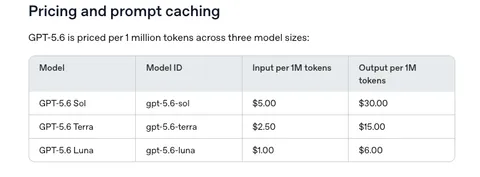
The table below uses standard API prices per 1 million tokens. GPT-5.6 Sol is shown at its short-context rate. Long-context, batch, regional, and third-party platform pricing may differ.
| Model | Cached input | Standard input | Output |
|---|---|---|---|
| Kimi K3 | $0.30 | $3 | $15 |
| GPT-5.6 Sol | $0.50 | $5 | $30 |
| Claude Fable 5 | $1 | $10 | $50 |
K3’s standard input and output prices are both about 30% of Claude Fable 5’s. Compared with GPT-5.6 Sol, K3 is 40% cheaper on input and 50% cheaper on output.
For a workload using 1 million uncached input tokens and 200,000 output tokens, the approximate cost is:
- Kimi K3: $6
- GPT-5.6 Sol: $11
- Claude Fable 5: $20
Caching matters even more for repositories, document collections, and persistent agents that repeatedly reuse context. Moonshot says the official Kimi API reaches a cache-hit rate above 90% on coding workloads, which could lower the real cost of long-running agents substantially.
Where Does K3 Sit Against Frontier Models?
Moonshot’s positioning is unusually direct: K3 reaches frontier territory, but it does not beat the strongest proprietary models overall.
| Model | Main strength | Main tradeoff |
|---|---|---|
| Kimi K3 | Low API price, 1M context, native multimodality, planned open weights | Overall experience still trails GPT-5.6 Sol and Claude Fable 5; difficult to self-host |
| GPT-5.6 Sol | Top-tier general reasoning, coding, and agent performance | Proprietary and more expensive than K3 |
| Claude Fable 5 | Strong long-running agents, complex knowledge work, and coding | Highest API price of the three; proprietary |
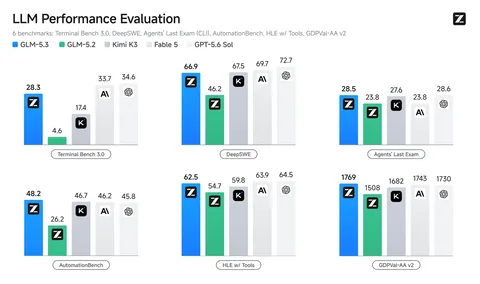
Moonshot’s evaluations show K3 performing competitively in long-horizon coding, GPU kernel optimization, knowledge work, and multimodal creation. These are vendor-reported results, however, and the models were not always tested with identical agent harnesses. They should not be read as proof that K3 broadly surpasses GPT or Claude.
Three Features That Matter More Than the 2.8T Headline
1. The 1M Context Window Is Built for Agent Work
K3 is aimed at large repositories, long documents, sustained research, and multi-tool agents rather than ordinary single-turn chat. Moonshot reports that K3 can use the full 1M-token window on BrowseComp without relying on frequent history compaction.
2. Native Multimodality Closes the Coding Feedback Loop
K3 can combine code, screenshots, images, and video inside one workflow. It can inspect live output and continue refining frontend, game, and CAD projects, while also handling video editing and motion-graphics tasks.
3. Open Weights Matter More Than Model Size
The 2.8T parameter count attracts attention, but the full weight release will determine K3’s impact on the open ecosystem. Moonshot plans to release the weights by July 27, while recommending supernode deployments with 64 or more accelerators. That puts full self-hosting beyond the practical reach of most teams.
Limitations at Launch
- Only max reasoning effort is available initially; lower-cost modes are still coming
- The full weights and technical report have not yet been released
- K3 is sensitive to preserved reasoning history, and switching models mid-session can destabilize quality
- It may act too proactively when user intent is ambiguous, requiring stricter system prompts or
AGENTS.mdrules - Moonshot explicitly acknowledges an overall experience gap versus GPT-5.6 Sol and Claude Fable 5
Conclusion
Kimi K3 is not automatically the best model because it has the largest parameter count. A more accurate description is: one of the most aggressive open-frontier models yet, offering near-frontier long-context, multimodal, and agent capabilities at roughly 30% to 60% of proprietary flagship API prices.
For developers, the immediate questions are not about 2.8T. They are whether K3 reduces real task costs in production, and whether open inference frameworks can support a model of this scale once the weights arrive on July 27.
Sources:
More Articles