Manus Introduces Cue: A Personal AI Agent with Its Own Email, Phone, and Wallet
Manus has introduced Cue alongside Manus 2.0, a personal AI Agent with its own phone number, email address, wallet, and computer. The product aims to move AI from one-off answers toward persistent, real-world assistance.
Manus is pushing AI agents beyond “help me complete a task” toward “handle an entire category of tasks for me.” On September 28, the company released Manus 2.0 and introduced Cue, a personal AI Agent designed for everyday life.
Cue’s defining idea is not another chat window. Instead, Manus says each Agent can have its own set of digital resources: a phone number, an email address, a wallet, and a computer. Users can treat Cue as a personal assistant that handles phone calls, sends emails, makes appointments, and processes payments.
Public information currently comes mainly from Manus announcements, product pages, and early discussions on social platforms. Details such as regional availability, pricing, payment permissions, and automation limits should be verified against the official product experience.
I. What Is Cue?
Most AI assistants require users to open a chat, enter an instruction, and receive text or a file in return. Cue takes a different direction: it is positioned as an Agent with an identity, tools, and persistent context that can interact with the outside world on a user’s behalf.
Its workflow can be summarized in three steps:
- Understand the goal: The user explains what needs to be done, such as booking a service or contacting an organization.
- Use its resources: Cue selects tools such as phone, email, browser, or computer and carries out a multi-step process.
- Report the result: The Agent provides an outcome and asks the user to intervene when confirmation, payment, or additional permissions are required.
The product therefore shifts the focus from generating content to taking action. Cue is closer to an execution agent with a digital workspace than to a conventional chatbot.
II. Five Core Capabilities
1. A Dedicated Phone Number
One of Cue’s most notable advertised capabilities is a dedicated phone number. In principle, users can delegate phone-based tasks such as contacting a business, confirming an appointment, or handling routine questions.
This makes the phone more than an input channel between a person and an AI. It becomes a way for the Agent to represent the user in the real world. For tasks involving waiting, transfers, and repeated confirmations, a phone agent may be more useful than simply drafting a response.
However, phone automation raises important questions around identity disclosure, recording, privacy, and local regulations. Users should verify whether Cue clearly identifies itself as an AI and how call content is stored and processed.
2. A Dedicated Email Address
Cue is also described as having its own email address. This goes beyond asking an AI to draft a message: a dedicated inbox could allow the Agent to send, receive, and follow up on correspondence.
For example, a user might ask Cue to contact a service provider, wait for a reply, and summarize the next steps. The value is not only better writing, but less manual follow-up across a communication chain.
Email is also a high-impact permission. Automated messages can be sent to the wrong recipient, make unintended commitments, or disclose sensitive information. Recipient controls, message previews, and confirmation rules will be essential.
3. An Agent Wallet
Another important part of Cue’s design is its wallet. This points toward a more complete form of transaction automation: the Agent may not only compare options, but also complete a purchase, booking, or payment after receiving authorization.
That could make Cue useful for reservations, digital purchases, and low-value daily expenses. But the ability to pay should not mean unlimited autonomous spending. Spending limits, approved-recipient lists, two-step confirmation, refunds, and transaction logs will determine whether users can trust the feature.
Before using any wallet feature, users should understand the funding source, authorization duration, transactions that require confirmation, and the process for correcting an error.
4. A Dedicated Computer
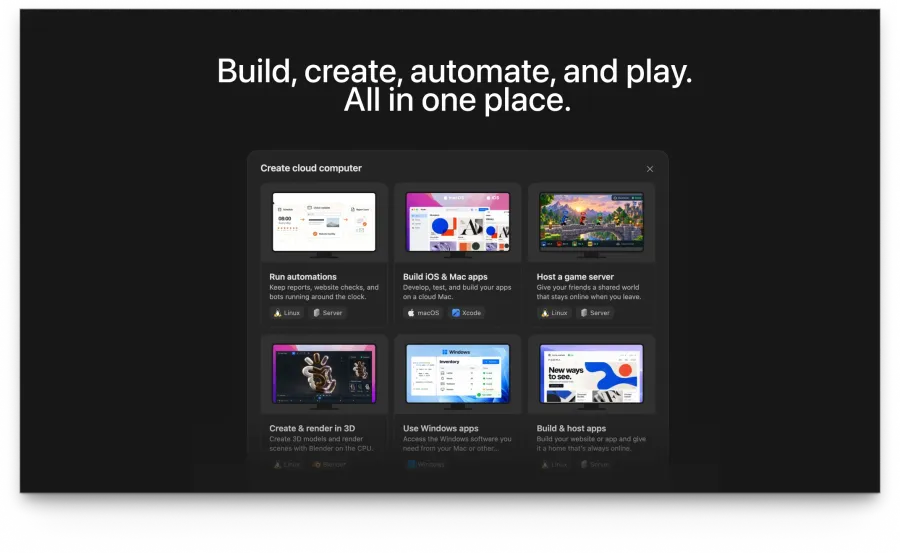
Cue is also presented as having its own computer environment. A Cloud Computer can let an Agent browse websites, fill out forms, operate software, download files, and organize documents, covering tasks that cannot be completed through a chat model alone.
The importance of this capability is that Cue is not limited to services with a dedicated API integration. If a task can be completed through a web or desktop interface, the Agent may be able to perform it through visual understanding and computer control.
Computer access also increases the surface area for mistakes. Login states, downloads, verification challenges, private pages, and high-impact actions all require clear permission boundaries and human confirmation.
5. Persistent Execution
Cue’s focus on personal life also implies ongoing collaboration. Users should be able to hand recurring tasks to the same Agent instead of restating the full context every time.
This aligns with Manus 2.0’s broader emphasis on automation and Agent workflows. Rather than responding only when prompted, an Agent can break a goal into steps, use tools, and continue moving the task forward.
III. How Is Cue Different from a Standard AI Assistant?
| Dimension | Standard Chat Assistant | Manus Cue |
|---|---|---|
| Main output | Text, images, or code | Task outcomes and external actions |
| Identity | Usually no independent identity | Can have its own phone and email |
| Tools | Depends on connected integrations | Phone, email, wallet, computer, and more |
| Workflow | Responds after the user asks | Executes multi-step tasks toward a goal |
| Risk profile | Accuracy and hallucinations | Also communication, payment, and permission risks |
The central change can be summarized simply: AI is moving from thinking for you toward doing things on your behalf.
IV. Where Could Cue Have the Biggest Impact?
Cue is best suited to tasks that are structured, repetitive, and easy to verify, such as:
- Booking restaurants, hotels, repairs, and other services;
- Managing multi-step email communication with businesses or organizations;
- Organizing schedules, reminders, and to-do items;
- Collecting information online, comparing options, and preparing recommendations;
- Completing low-risk purchases or bookings within a limited budget.
Even if Cue can execute tasks involving healthcare, finance, legal matters, account security, or high-value purchases, that does not mean full automation is appropriate. Users should treat it as a controlled tool, not as a digital identity to which unlimited authority can be granted.
V. The Real Test: Trust and Control
Cue significantly expands the operational boundary of an Agent, and with it the product’s responsibility boundary. An Agent that can email, call, operate a computer, and potentially pay must answer several basic questions:
- Does it clearly disclose that it is an AI during interactions?
- Which actions require confirmation, and which can run automatically?
- How long are email, call, and transaction records stored, and who can access them?
- Can users revoke, audit, and dispute an action when the Agent makes a mistake?
- Can wallet, email, and computer permissions be configured separately and paused at any time?
The answers will determine whether Cue becomes a personal assistant that people can rely on every day or an automation product limited to controlled demonstrations.
Conclusion: AI Agents Are Gaining Life Infrastructure
Manus Cue sends a clear signal: competition among AI Agents is moving beyond model responses toward identity, tools, permissions, and persistent execution. A dedicated phone, email address, wallet, and computer give an Agent something closer to the “life infrastructure” of a real assistant.
Whether Cue can become a product that ordinary users trust over the long term will depend on execution reliability, pricing, regional availability, and permission controls. But its direction is already clear. The question is no longer only whether AI can answer a request. It is whether users are willing to let AI act on their behalf.
More Articles