GLM-5.2 Goes Fully Open Today: 753B Parameters Beat GPT-5.5 at 1/6 the Cost
Z.ai officially open-sources GLM-5.2 today: 753B parameters, 1M-token context, MIT license. Beats GPT-5.5 on FrontierSWE at 1/6th the cost. After MiniMax M3, another Chinese AI bombshell.
Published 104 days ago. Content may be outdated.
Today, GLM-5.2 Goes Fully Open
June 17, 2026: Z.ai (formerly Zhipu AI) officially open-sources its flagship model GLM-5.2 under the MIT license with full weights available.
This isn’t “limited open-source” or “research-only.” It’s fully commercial, no borders, no strings attached. Download the weights from Hugging Face or ModelScope and use them however you want.
Core specs:
| Metric | Data |
|---|---|
| Parameters | 753B (MoE architecture, 40B active per token) |
| Context Window | 1 million tokens (max output: 128K tokens) |
| License | MIT (most permissive commercial license) |
| API Pricing | Input $1.4/M tokens, Output $4.4/M tokens |
| Cost Advantage | 1/4 to 1/6 of comparable closed models |
Two weeks after MiniMax M3, but this open-source push hits harder—a 753B-parameter MoE model, fully open weights.
Performance: Beats GPT-5.5 on FrontierSWE
GLM-5.2’s positioning is clear: Long-Horizon Tasks + Autonomous Software Engineering Agents.
What’s “long-horizon”? Not writing a function or fixing a bug. Think continuous, multi-hour to multi-day open-source project-level development tasks—compiler optimization, kernel debugging, multi-system coordination.
Core benchmark results:
1. Long-Horizon Engineering-Grade Code Evaluation
| Benchmark | GLM-5.2 | GPT-5.5 | Claude Opus 4.8 |
|---|---|---|---|
| FrontierSWE | 74.4% | 72.6% | 75.1% |
| PostTrainBench | 34.3% | 28.4% | 37.2% |
| SWE-Marathon | 13.0 | - | 26.0 |
FrontierSWE evaluates Agent performance on multi-hour to multi-day open-source technical projects. GLM-5.2 hits 74.4%, surpassing GPT-5.5’s 72.6%, with only a 0.7% gap to Claude Opus 4.8.
PostTrainBench tests whether Agents can train and improve smaller models. GLM-5.2 scores 34.3%, leading GPT-5.5 by nearly 6 points.
SWE-Marathon covers high-difficulty compiler, kernel optimization, and system-level development. GLM-5.2 scores 13.0—still trailing Opus 4.8’s 26.0, but well ahead of comparable open models like Gemini 3.1 Pro (4.0).
2. Traditional Programming & General Capability Tests
| Benchmark | GLM-5.2 | GLM-5.1 (Previous) |
|---|---|---|
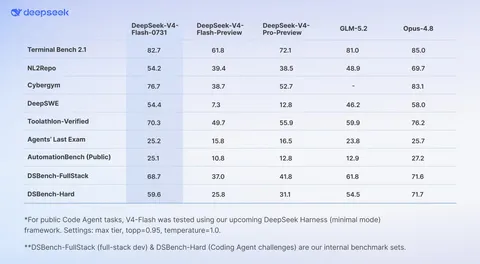
| Terminal-Bench 2.1 | 81.0 | 63.5 |
| SWE-bench Pro | 62.1 | 58.4 |
| MCP-Atlas | 76.8 | - |
| AIME 2026 | 99.2 | - |
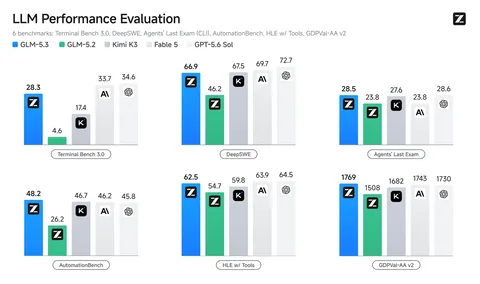
Terminal-Bench 2.1 scores 81.0, making it the first open-weight model to break 80% on this evaluation.
MCP-Atlas (tool invocation mechanism test) scores 76.8, ahead of GPT-5.5’s 75.3.
AIME 2026 (math competition test) scores 99.2, excelling in complex mathematical reasoning.
3. Blind Arena Performance
- LMArena Coding Blind Test: GLM-5.2 beats Claude Opus 4.7 and 4.8, ranking #2 globally
- Design Arena Design Programming Test: Beats Claude Fable 5, ranking #1 globally
First time an open-source model has defeated top closed models in blind testing.
Tech: 1M Context + IndexShare Architecture Optimization
GLM-5.2’s technical upgrades focus on three areas:
1. Solid 1M Lossless Context
Context window jumps from GLM-5.1’s 200K tokens to 1 million tokens, with max single-turn output of 128K tokens.
The key isn’t just “long”—it’s “usable.” Z.ai conducted massive Agent training on 1M context, covering code base implementation, automated research, performance optimization, and complex debugging through messy, long-horizon Agent trajectories.
When handling ultra-long text and multi-system engineering, GLM-5.2’s comprehension and coherence remain stable. Not “can read 1M tokens,” but “understands 1M tokens and gets work done.”
2. Hardware & Architecture Optimization: IndexShare
The pain point of long context is excessive compute consumption. Z.ai proposes the IndexShare mechanism:
- Reuses the same lightweight indexer across every 4 sparse attention layers
- At 1M context length, successfully reduces per-token compute (FLOPs) by 2.9x
- Improved Multi-Token Prediction (MTP) layers for speculative decoding, boosting token acceptance length by up to 20%
Simply put: do the same work with 1/3 the compute.
3. Flexible Effort
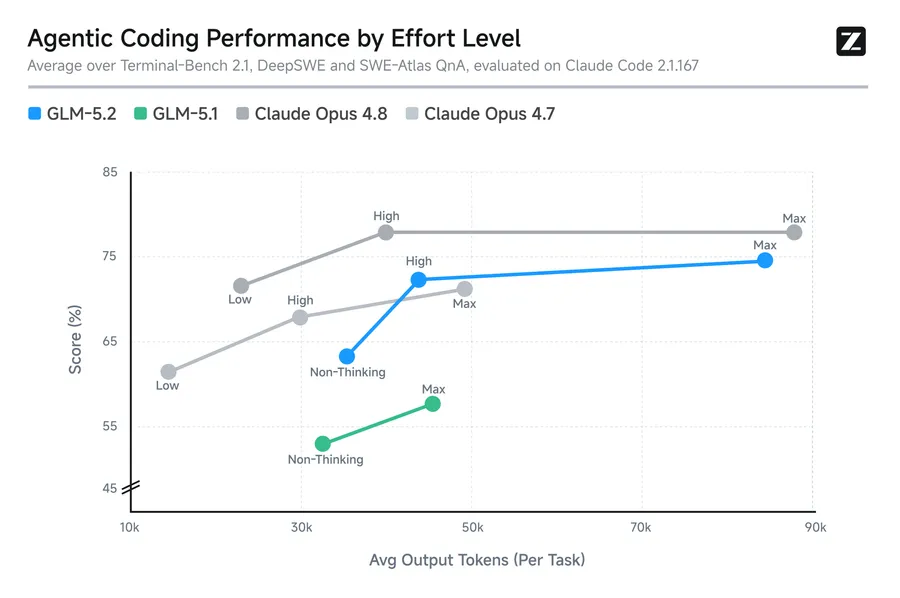
Supports customizable thinking depth at inference time (including High and Max modes). For complex, multi-step coding tasks, choosing Max mode trades more compute time (and tokens) for higher reasoning accuracy.
This gives developers a “tuning knob”: fast for simple tasks, thoughtful for complex ones.
Ecosystem: Already Integrated with Mainstream Tools
GLM-5.2’s open-source isn’t “drop a weight file and run”—it comes with full toolchain support:
Local Inference Support
Already adapted for mainstream local inference frameworks:
- transformers
- vLLM
- SGLang
- xLLM
- ktransformers
- Ollama
Download weights and run—no wheel reinvention needed.
Tool Integration
Supports seamless integration with current mainstream code Agent frameworks:
- Claude Code
- OpenCode
- Cline
- Z.ai’s official ZCode desktop client
Developers can treat GLM-5.2 like a “drop-in chip” for existing workflows.
Pricing: 1/6 the Cost, Same Fight
Official API pricing:
- Input: $1.4/million tokens
- Output: $4.4/million tokens
Compared to closed models:
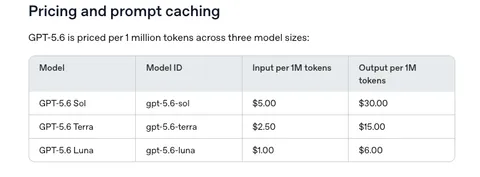
- GPT-5.5: ~$8/M input, ~$24/M output
- Claude Opus 4.8: ~$10/M input, ~$30/M output
GLM-5.2 costs 1/4 to 1/6 of these.
Key point: performance isn’t 1/6—it’s on par or better.
This isn’t “cheap means bad.” This is “good and cheap.”
Why Open-Source Now?
GLM-5.2’s open-source timing is telling:
- June 12: Anthropic’s flagship Claude Fable forced offline by U.S. government
- June 13: Zhipu announces GLM-5.2 will open-source
- June 17: GLM-5.2 officially open-sources with full weights
Z.ai’s official tagline: “GLM-5.2 is Fully Open, Frontier Intelligence Belongs to Everyone.”
This isn’t just a product launch. It’s a statement: you lock down, we open up; you build walls, we tear them down.
Combined with last week’s MiniMax M3 open-source, Chinese model makers’ strategy is clear:
- Not competing on “whose model is strongest” (can’t catch up short-term)
- Competing on “whose ecosystem is largest” (open-source is the shortcut)
- Using cost advantage + open strategy to rapidly capture developer mindshare
Closed models’ moat is technical edge, but technical edges get closed. Open models’ moat is ecosystem lock-in, and once ecosystems are built, they’re hard to shake.
Who Will Use GLM-5.2?
This model’s target users are clear:
1. Developers Needing Long-Horizon Agents
- Automated codebase refactoring
- Multi-system coordinated development
- Complex performance optimization
- Extended autonomous debugging
2. Teams with Limited Budgets but High Standards
- Cost is 1/6 of closed models
- Performance matches or beats GPT-5.5
- Can self-host, data stays in-domain
3. Researchers Building on Top of LLMs
- MIT license, no restrictions
- Can distill, fine-tune, commercialize
- Full open weights, architecture is researchable
Final Thought
GLM-5.2’s open-source, plus MiniMax M3’s open-source two weeks ago, makes Chinese AI’s roadmap crystal clear:
Not playing the closed-source moat game—flipping the table instead.
OpenAI, Anthropic, and Google form a “Model Protection Coalition,” guarding model weights like semiconductor chips. Zhipu and MiniMax choose full open-source, handing control to developers.
Two strategies. Too early to call winners. But one thing’s certain:
When performance gaps shrink to 10%, cost gaps are 6x, and one’s open while the other’s closed—developers will vote with their feet.
A year from now, we’ll know who bet right.
Resources:
More Articles